

Analysis · May 2026 · 4 min read
Why your brochure reassures everyone except your clients
There is a document almost every service business owns and almost no client reads: the brochure. Twenty pages, the firm’s history, the org chart, the exhaustive list of services, a few photographs of the offices. A perfectly accurate document, and perfectly useless.
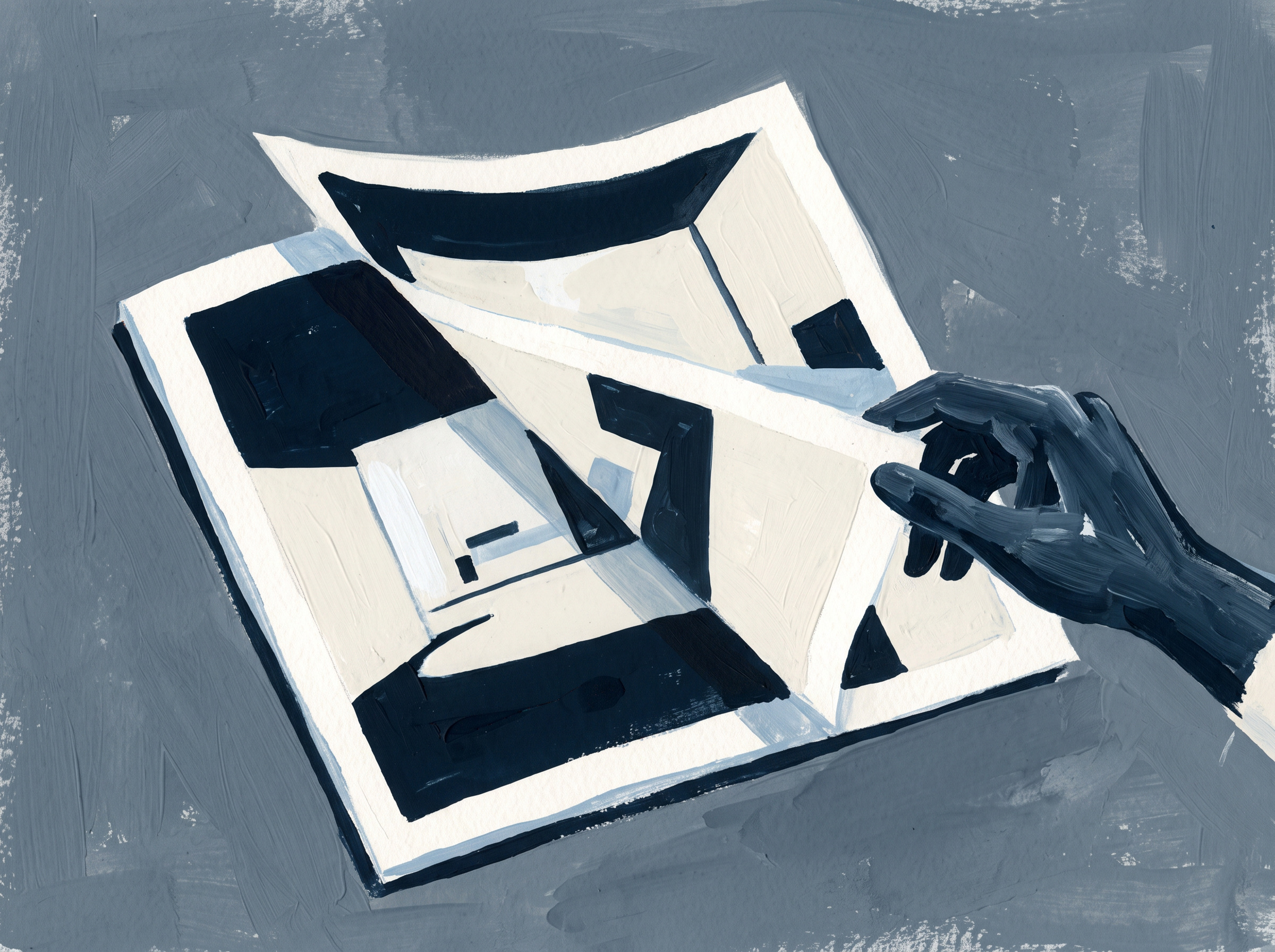
Its real audience is not the one you think. The classic brochure is written for the inside: it reassures the partners (everyone is in it), it reassures the history (nothing is left out), it reassures completeness (no service is missing). It is a document of consensus, and consensus always produces the same result: a text nobody can contest because it says nothing.
The client is looking for something else. He is not asking "what do they do?". He is asking "do they understand my problem, and are they the best at solving it?". The exhaustive brochure answers precisely beside the point: by showing you do everything, it suggests you excel at nothing. By talking about yourself, it proves you are not talking about him. By lining up the same formulas as your competitors ("proximity", "tailor-made", "recognised expertise"), it makes comparison inevitable, and then the decision comes down to price.
The test is simple and cruel: cover the logo on your brochure. If the document could belong to your direct competitor, it is not working for you: it is working for the category. You are paying to promote your market.
What is needed instead comes down to three shifts. Speak about the client before speaking about yourself: his problem named more precisely than he could name it. Choose rather than stack: a positioning is recognised by what it dares to exclude. Prove rather than assert: one specific case, one figure, one named method are worth a hundred adjectives.
A brochure has one mission: to make the reader say "that is exactly us". Everything that does not serve that sentence works against it.
Scanvalue